Street legal in TexasTitle and register it like any vehicle (SB 1816)
Paperwork includedBill of sale, Japan export certificate, import customs forms
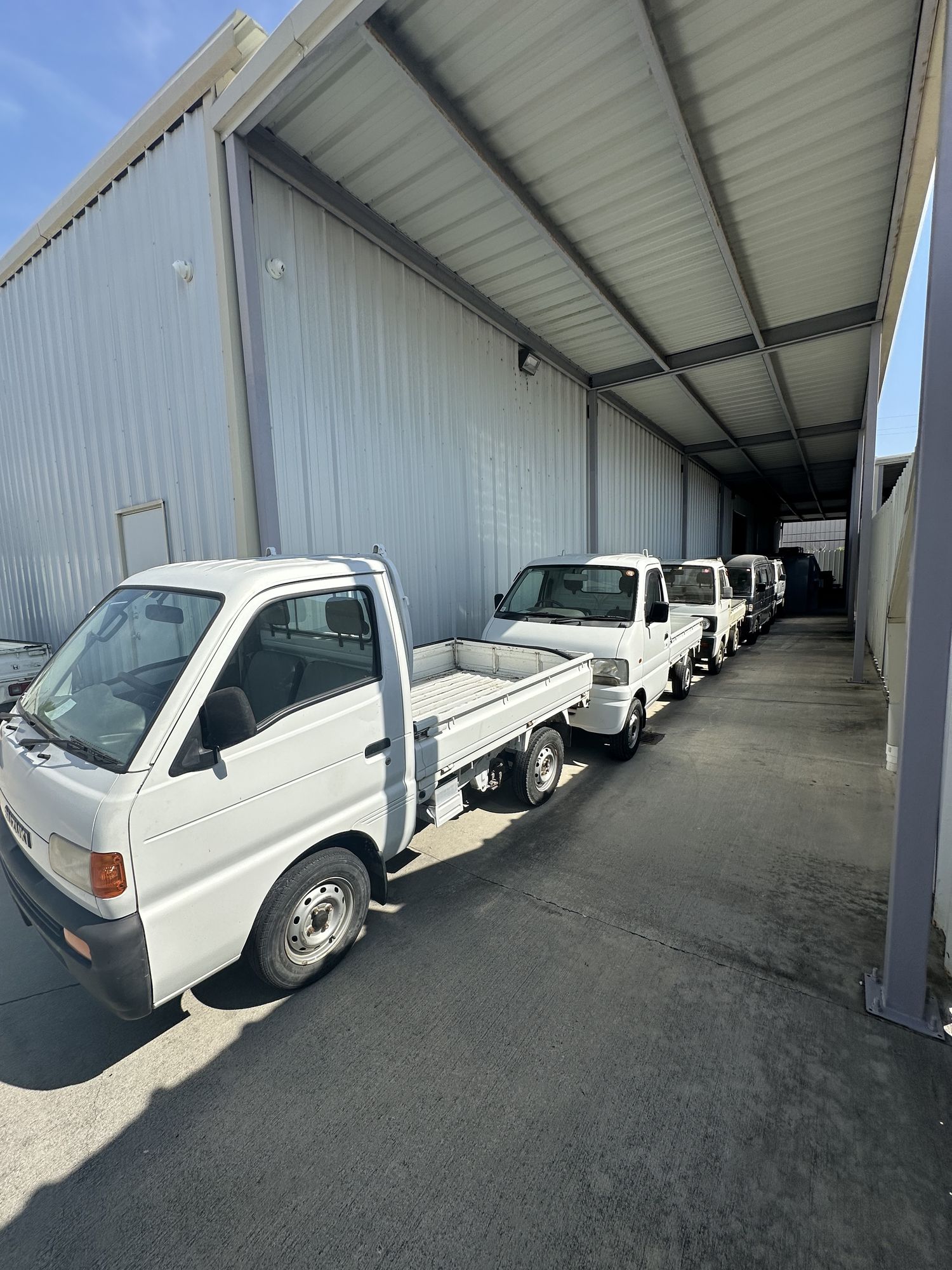
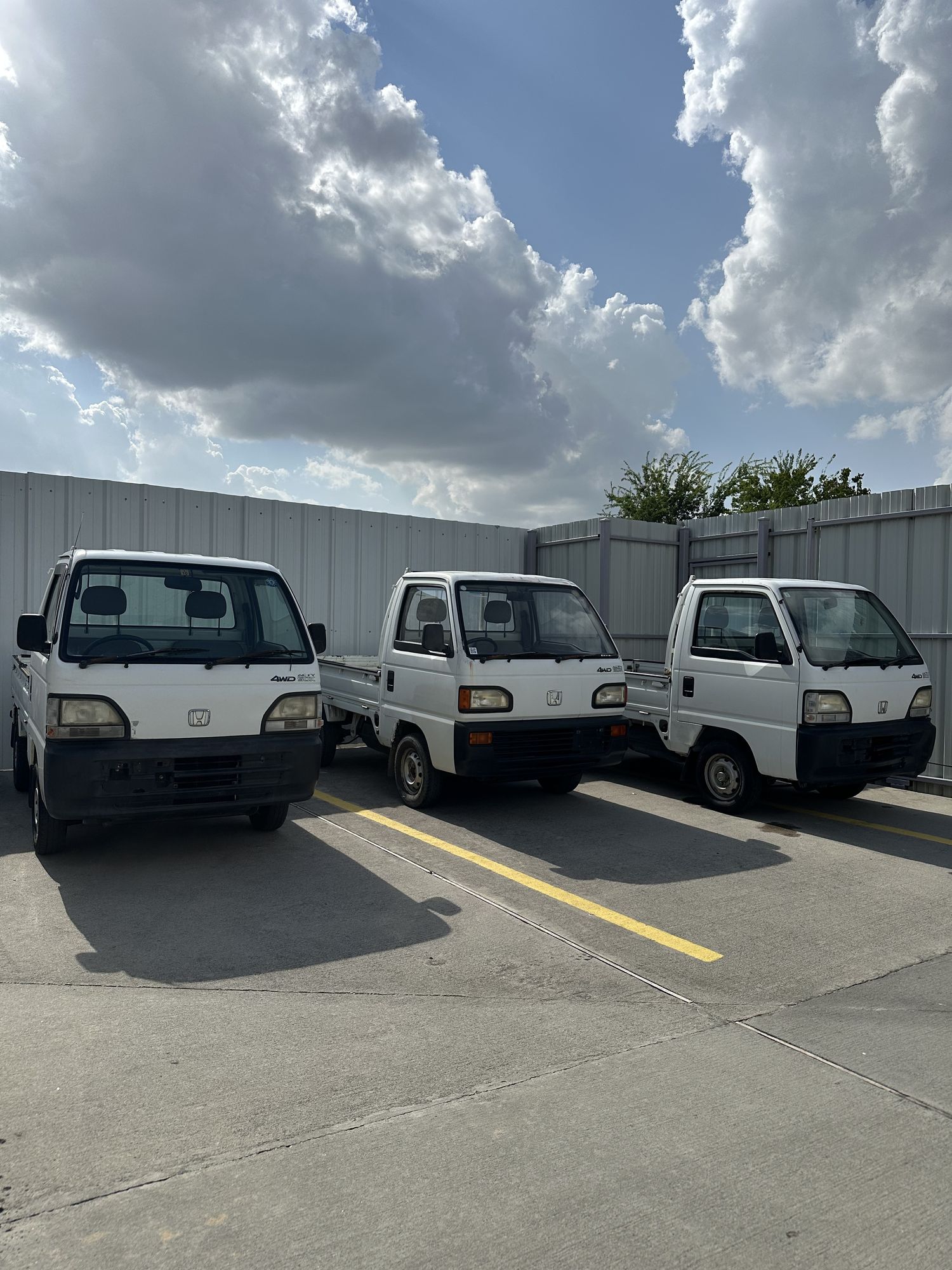
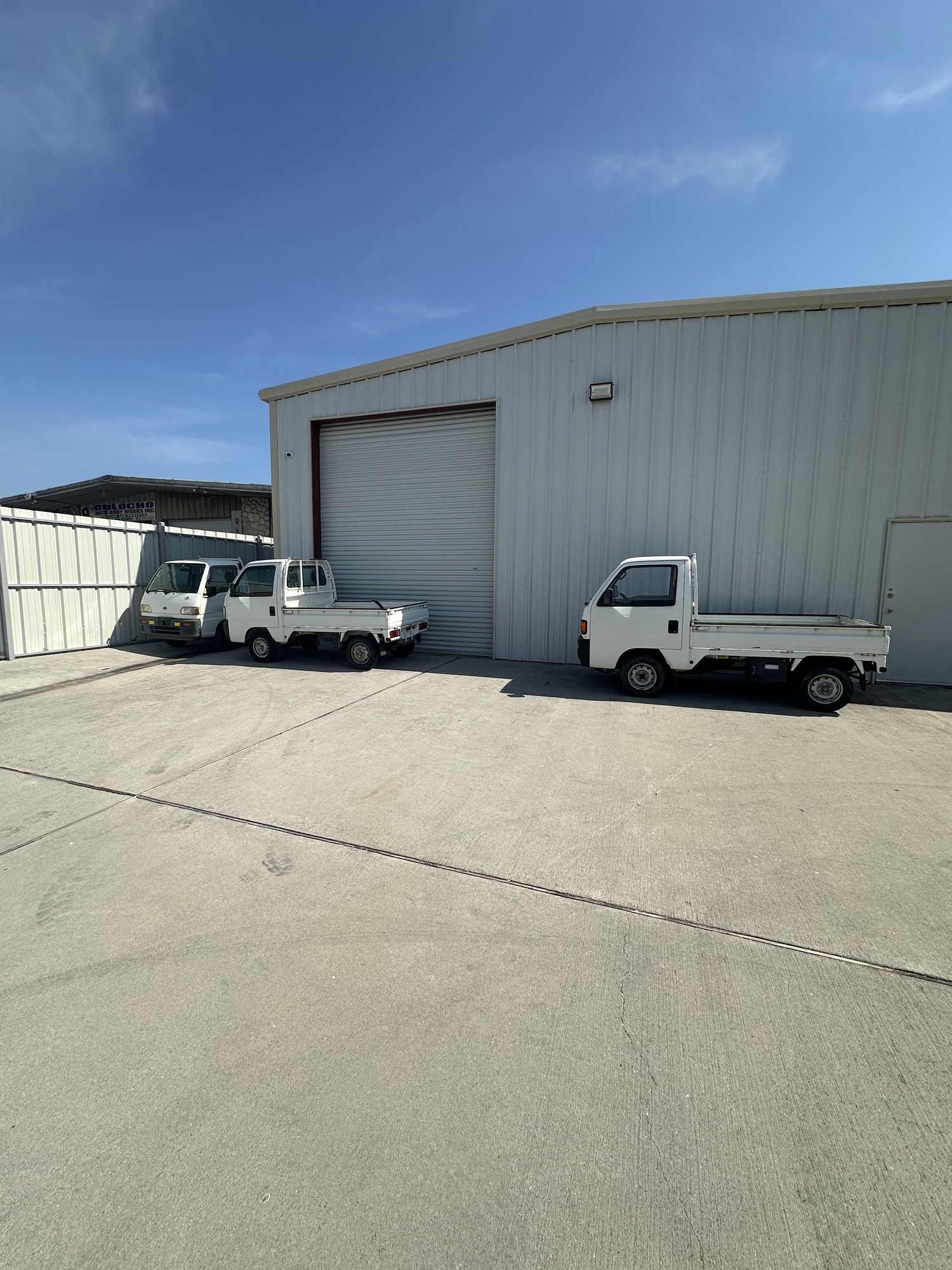
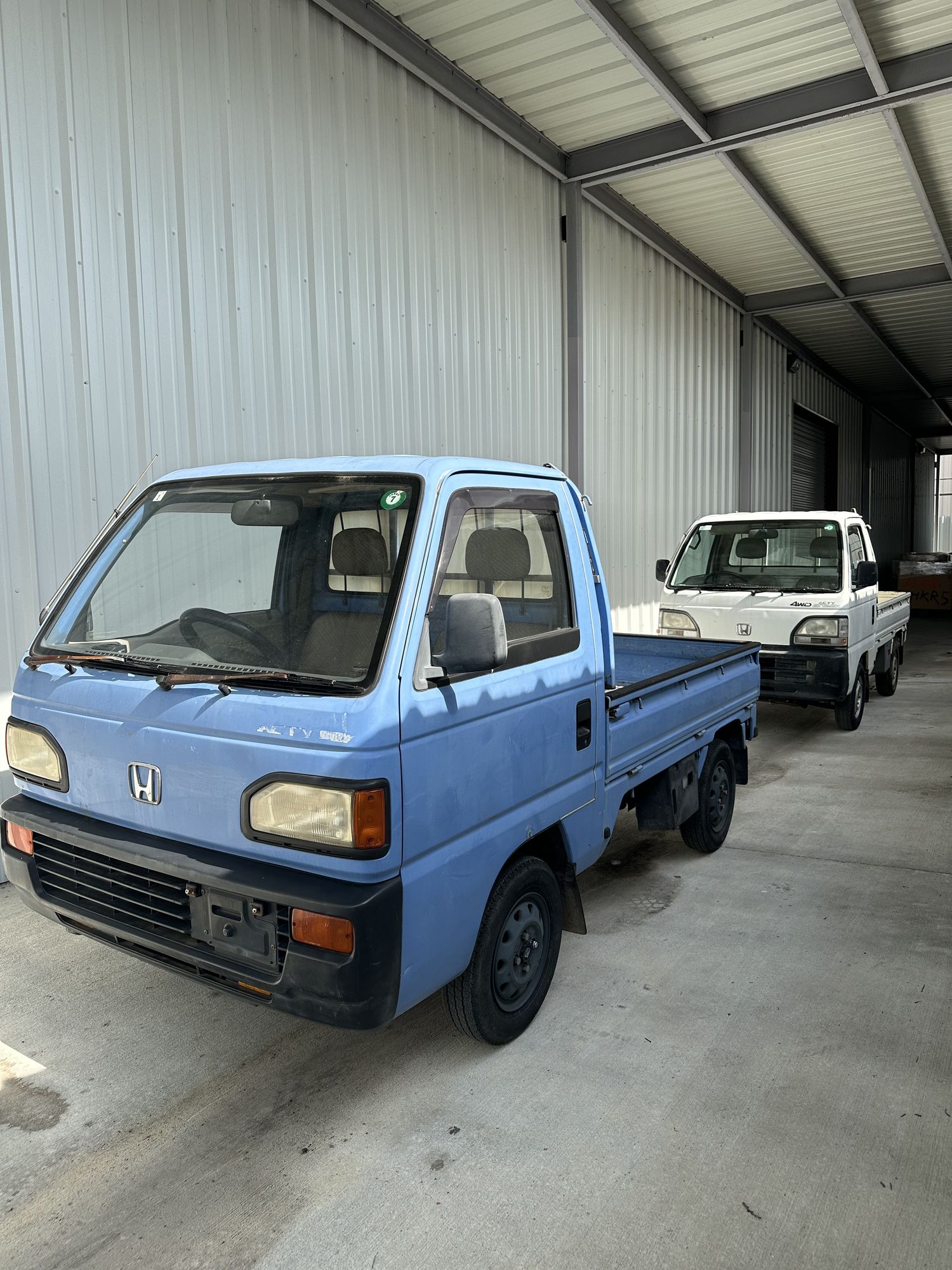
Visit by appointmentDrive them at our Houston warehouse
Inventory
Kei trucks
Every truck we have, in the warehouse or on the way from Japan.
No trucks match those filters right now. Message us and we will let you know when one comes in.
Prices include the truck, the Japan export certificate and the import customs paperwork. Texas sales tax and title and registration fees are paid to the county when you title it (see an example in the title guide). Sold as is, and all sales are final.
Sold
Gone to new owners
How it works
Buying a truck
Pick a truckEvery listing shows whether it is in Houston or on the way from Japan.
Browse the photos and videosBrowse all the photos and videos on each listing, and ask us if you have any questions.
See it, drive it or ask about itTruck in Houston? Book a time at 9323 Ronda Ln to look it over and drive it. Truck on the way? Message us and we will let you know when it arrives.
Pay and take it homePay and take home the truck, the Japan export certificate, the import customs documents and our step-by-step Texas title guide.
Title it yourself and save
Kei trucks sold already titled often cost a few thousand dollars more. Titling one yourself in Texas comes down to a VIN inspection, your import paperwork, a title application and a visit to your county tax office, and our step-by-step guide walks you through each step.
Kei trucks are Japan's compact work trucks. With a 660cc engine and a body about 11 feet long, under 5 feet wide and about 6 feet tall, they fit through gates, barn doors and tight spots that full-size pickups can't, and they are easy on gas. People use them for business, for work on farms, ranches and job sites, and as an easy daily driver.
Contact
Talk to us
Call, text, email or message us on Instagram or Facebook to ask about a truck, set up a viewing or ask about a truck on the way.
How to title and register an imported kei truck in Texas
Last updated November 4, 2026. General information, not legal advice. Rules, fees and county procedures change, so confirm with your county tax assessor-collector's office before you go.
A kei truck fresh from Japan has no U.S. title yet. That is normal. Texas titles it like any other imported vehicle: one packet of documents, one VIN inspection and a visit to your county tax office. This guide covers each step for a truck you buy from us. The steps are the same anywhere in Texas. If you live near Houston, local phone numbers and booking links are in their own section below.
Key facts
Street legal? Yes, once titled and registered. Texas Senate Bill 1816 (2025) defines "miniature vehicles" and treats them as motor vehicles for titling and registration. A titled and registered miniature vehicle may be driven on public highways if it can operate in compliance with traffic laws.
Age? Texas has no age rule of its own. The 25-year rule is federal: kei trucks are imported for road use once they are 25 years old.
The extra step for imports: a VIN inspection by a police auto theft investigator, on Form VTR-68-A.
Deadline: title the truck within 30 days of buying it.
2 days after you file: call your county tax office to make sure it went through. The state system automatically rejects kei chassis numbers, and you may not find out for weeks unless you call.
Cost: about $530 to $566 in sales tax and fees on a $7,000 truck, depending on your county ($546 in Harris County). See the table below.
What you receive from us
Bill of sale
Japanese export certificate (in Japanese, so you will need a notarized English translation)
CBP Form 7501, DOT Form HS-7 and EPA Form 3520-1 customs paperwork
This guide, plus help if the county has questions
The bill of sale shows the truck's current odometer reading, in kilometers. The export certificate shows the reading recorded in Japan before export, so the two can differ. Bring the originals to the county office.
Yes. In 2025 Texas added "miniature vehicles" to its Transportation Code. In plain terms: a miniature vehicle is treated like any other motor vehicle for titling and registration, and it may be driven on a public highway if it has been titled and registered in Texas and can operate in compliance with traffic laws. To qualify, a vehicle must be designed to run on four or more tires, comply with applicable federal law, and not be a custom vehicle, street rod, golf cart, neighborhood electric vehicle or off-highway vehicle. The law adds no engine-size limit, speed cap or highway ban, but the general rule against driving so slowly that you impede traffic still applies.
The 25-year rule comes from federal law. Kei trucks were not built to U.S. safety standards, so they are imported for road use under the federal 25-year exemption, counted from the date of manufacture and declared on DOT Form HS-7. The EPA has its own, shorter age exemption for emissions: the vehicle must be at least 21 years old and in its original configuration, with age counted by subtracting the year it was manufactured from the year it is imported. That is the exemption declared on EPA Form 3520-1.
Documents you need to title it
Document
Notes
From us (J Speed Auto)
Bill of sale
Shows the current odometer reading
Japanese export certificate
Shows the odometer reading recorded in Japan before export, which can differ from the current reading
CBP Form 7501, U.S. Customs entry summary
Shows the truck was legally imported
DOT Form HS-7 declaration
25-year exemption from safety standards (Box 1). TxDMV asks for the HS-7 or another document showing customs entry. Harris County's checklist says vehicles 25 or older still need proof of customs entry, so bring every document
EPA Form 3520-1 declaration
Age exemption from emissions standards (21 years, counted from the year of manufacture to the year of import)
From you
Photo ID
Since March 5, 2026, a first Texas registration needs an ID on TxDMV's list, such as a Texas driver license, a REAL ID or a U.S. passport
Proof of Texas liability insurance
From your insurer. See the insurance section below
Notarized English translation of the export certificate
The export certificate is in Japanese, so get a notarized English translation. It meets both TxDMV's and Harris County's requirements. A translation service such as RapidTranslate.org can do both
From the county or police
Form 130-U, Application for Texas Title and/or Registration
TxDMV.gov or your county tax office
Form VTR-68-A, Law Enforcement Identification Number Inspection
Done by appointment with a police auto theft unit or sheriff's office. See how to book below
Insurance
Texas requires proof of liability insurance, at least 30/60/25 ($30,000 per person, $60,000 per accident, $25,000 property damage), before you can register a vehicle. Kei trucks are uncommon, so coverage depends on the insurer.
Call before you buy. Give the agent the year, make, model and chassis number.
Try insurers such as Hagerty, State Farm and Progressive. Be specific, and ask for an agent who understands that kei trucks have a Japanese chassis number instead of a 17-character VIN.
If one company says no, try another.
Insurance is between you and your insurer, and policies and eligibility change, so confirm coverage with them directly.
Step by step
Check the paperwork before you pay. The chassis number on the export certificate should match the number stamped on the truck. The HS-7 should be marked Box 1, and no paperwork should say "off-highway use only," because TxDMV will not register a truck titled that way. Then order a notarized English translation of the export certificate, so it is ready for the county.
Insure the truck. Kei trucks have chassis numbers like DA63T-123456, not a 17-character VIN. Give your insurer the full chassis number and tell them it is a Japanese import.
Book the VIN inspection (VTR-68-A). Appointments can take weeks, so book as early as you can. See the next section for details.
Call your county tax office and ask for their imported vehicle requirements. Counties handle these differently, and some publish a checklist.
Fill out Form 130-U and sign it. We sign the seller section when you buy the truck.
Go to your county tax assessor-collector's office within 30 days of the sale. Bring the full packet and pay the title fee, registration and sales tax. Find your office on TxDMV's county tax office list, and book an appointment if your county offers them.
Call your tax office 2 days after filing to ask whether the application was rejected. The state system automatically rejects kei chassis numbers, and the county then has to send the application to TxDMV for special handling. You may not hear about it for weeks unless you ask. If it was rejected, ask the county to forward it to TxDMV for special handling right away. This is the normal path for kei trucks, and TxDMV reviews it from there.
Receive plates and your title. Once the county approves the application, you receive your plates and registration sticker, and the Texas title is mailed to you.
Timeline
Title and register the truck in your name within 30 days of the sale. After that, a $25 late-transfer penalty applies, plus $25 for each additional 30 days, up to $250.
VIN inspection: book it early so you can still title the truck within 30 days of the sale.
2 days after filing: call your tax office to confirm it went through, so a rejection doesn't sit for weeks.
The VIN inspection
Texas law requires a trained law enforcement auto theft investigator, or another inspector TxDMV authorizes, to inspect an imported vehicle and sign Form VTR-68-A. The truck has to be there for the inspection. It is not registered yet, so to drive it there, get a One-Trip Permit first: a temporary plate for one trip within 15 days, $9.75 at your county tax office, with proof of liability insurance. Our buyers have used one to drive to their inspection. Otherwise, bring the truck on a trailer.
Inspections are done by county sheriff's offices and city police auto theft units, usually on set days and often by appointment only. Call your county sheriff or city police department and ask for a VTR-68-A inspection. Some charge a fee, often around $40, and some book weeks out, so call early. Bring your ID, the bill of sale, all the import documents, and proof of insurance if you drive the truck there.
What it costs
Example: a $7,000 truck titled in Harris County. Across Texas, the title fee is $28 or $33 and the local county fee is $0 to $31.50, so the total runs about $530 to $566 depending on your county.
Item
Amount
Motor vehicle sales tax, 6.25%
$437.50
Title application fee ($28 or $33 depending on county)
$33.00
State registration fee
$50.75
Insurance verification fee
$1.00
Processing and handling fee
$4.75
Local county fees (varies by county)
about $11.50
Inspection program replacement fee
$7.50
Estimated total
about $546
Plus any fee for the VIN inspection (often around $40) or the notarized translation. Sales tax is 6.25% of the price on your bill of sale. Fee amounts come from TxDMV and your county tax office. Confirm current numbers before you go.
If the county has questions
What you hear
What to know
"Mini trucks cannot be titled in Texas."
That was TxDMV policy until April 2024, when TxDMV began titling and registering mini vehicles. The 2025 law now puts miniature vehicles in the Transportation Code. Ask the clerk to check section 14.12 (Miniature Vehicles) of the TxDMV Motor Vehicle Title Manual.
"Invalid VIN."
Kei chassis numbers are not 17 characters. TxDMV's April 2026 notice to counties says these applications are rejected automatically and must be sent to TxDMV for special handling. It means the application needs special handling, not that the truck can't be titled.
"You need a safety inspection."
Texas ended safety inspections for non-commercial vehicles on January 1, 2025. Emissions testing covers only gasoline vehicles 2 to 24 model years old, so a truck 25 model years or older needs no inspection report. Explain this politely, and ask whether they only need the VTR-68-A VIN inspection.
"We cannot accept this translation."
Ask exactly what your county requires for the translation, and bring a notarized one.
Need more help? It helps to bring printouts of SB 1816 and TxDMV's April 2024 and April 2026 notices, listed in the sources below. Ask for a supervisor, or contact your TxDMV Regional Service Center. TxDMV customer service is at 1-888-368-4689.
After you are registered
You may drive on public roads, including highways, as long as the truck can operate in compliance with traffic laws. Texas law does not let you drive so slowly that you impede normal traffic.
Keep your insurance current and renew the registration every year.
Near Houston: who to call
If you live in the Houston area, these are the offices that handle each step. Schedules change, so call or check their page before you go.
VIN inspection (VTR-68-A)
Unincorporated Harris County: Harris County Sheriff's Office Auto Theft, Wednesdays only, by appointment only. Book through the link in their procedures, email [email protected] or call 832-927-2800. See their VTR-68-A procedures.
Fort Bend County: Fort Bend County Sheriff's Office Auto Theft Unit, 231 Legion Dr., Richmond, Tuesdays at 9 a.m. and 1 p.m. No appointments, $40 by money order or cashier's check, Fort Bend County residents only. See their Auto Theft Unit page.
Montgomery County and nearby counties: Montgomery County Sheriff's Auto Theft Task Force, 102 Academy Dr., Conroe, Tuesdays, by appointment. Call 936-760-5847. Serves Montgomery, Grimes, Walker, Madison, San Jacinto, Angelina, Polk, Liberty and Trinity counties. See their 68A inspection page.
Galveston and Brazoria counties, Webster, Seabrook and Friendswood: Galveston County Auto Crimes Task Force, Thursdays, by appointment, often six or more weeks out. $40. Call (409) 766-4500. See their VIN verification page.
Harris County tax office
Call 713-274-8000 first and ask what they need for a vehicle imported from another country.
Harris County publishes an imported vehicle checklist (RTS-046). It lists the VTR-68-A VIN inspection and a notarized translation, and says vehicles 25 or older still need proof of customs entry.
Cómo titular y registrar en Texas una camioneta kei importada
Última actualización: 4 de noviembre de 2026. Información general, no es asesoría legal. Las reglas, tarifas y procedimientos de los condados cambian, así que confirma con la oficina del recaudador de impuestos (tax assessor-collector) de tu condado antes de ir.
Una camioneta kei recién llegada de Japón todavía no tiene título de EE. UU. Eso es normal. Texas la titula como cualquier otro vehículo importado: un paquete de documentos, una inspección del VIN y una visita a la oficina de impuestos de tu condado. Esta guía explica cada paso para una camioneta que nos compres. Los pasos son los mismos en cualquier parte de Texas. Si vives cerca de Houston, los teléfonos y enlaces para agendar están en su propia sección más abajo.
Datos clave
¿Es legal en la calle? Sí, una vez titulada y registrada. El Proyecto de Ley 1816 del Senado de Texas (2025) define los "vehículos en miniatura" (miniature vehicles) y los trata como vehículos de motor para el título y el registro. Un vehículo en miniatura titulado y registrado puede circular por vías públicas si puede operar cumpliendo las leyes de tránsito.
¿Antigüedad? Texas no tiene una regla de antigüedad propia. La regla de 25 años es federal: las camionetas kei se importan para uso en la calle cuando tienen 25 años.
El paso extra para importados: una inspección del VIN hecha por un investigador de robo de autos de la policía, en el Formulario VTR-68-A.
Plazo: titula la camioneta dentro de los 30 días después de comprarla.
2 días después de hacer el trámite: llama a la oficina de impuestos de tu condado para confirmar que pasó. El sistema estatal rechaza automáticamente los números de chasis kei, y puedes tardar semanas en enterarte si no llamas.
Costo: unos $530 a $566 en impuesto de venta y tarifas por una camioneta de $7,000, según tu condado ($546 en el condado de Harris). Ve la tabla más abajo.
Lo que te entregamos
Factura de venta (bill of sale)
Certificado de exportación japonés (en japonés, así que necesitarás una traducción notarizada al inglés)
Formularios de aduana CBP 7501, DOT HS-7 y EPA 3520-1
Esta guía, y ayuda si el condado tiene preguntas
La factura de venta muestra la lectura actual del odómetro, en kilómetros. El certificado de exportación muestra la lectura registrada en Japón antes de exportarla, así que las dos pueden ser diferentes. Lleva los originales a la oficina del condado.
Sí. En 2025 Texas agregó los "vehículos en miniatura" a su Código de Transporte. En palabras sencillas: un vehículo en miniatura se trata como cualquier otro vehículo de motor para el título y el registro, y puede circular por una vía pública si fue titulado y registrado en Texas y puede operar cumpliendo las leyes de tránsito. Para calificar, el vehículo debe estar diseñado para rodar sobre cuatro llantas o más, cumplir con la ley federal aplicable y no ser un vehículo personalizado, street rod, carrito de golf, vehículo eléctrico de vecindario ni vehículo todoterreno (off-highway). La ley no agrega límite de tamaño de motor, ni velocidad máxima, ni prohíbe la autopista, pero sigue aplicando la regla general de no manejar tan despacio que estorbes el tráfico.
La regla de 25 años viene de la ley federal. Las camionetas kei no se fabricaron con las normas de seguridad de EE. UU., así que se importan para uso en la calle bajo la exención federal de 25 años, contados desde la fecha de fabricación y declarada en el Formulario DOT HS-7. La EPA tiene su propia exención de antigüedad, más corta, para emisiones: el vehículo debe tener al menos 21 años y estar en su configuración original, y la antigüedad se cuenta restando el año de fabricación al año de importación. Esa es la exención que se declara en el Formulario EPA 3520-1.
Documentos que necesitas para titularla
Documento
Notas
De nosotros (J Speed Auto)
Factura de venta (bill of sale)
Muestra la lectura actual del odómetro
Certificado de exportación japonés
Muestra la lectura del odómetro registrada en Japón antes de exportarla, que puede ser diferente de la lectura actual
Formulario CBP 7501, resumen de entrada de la Aduana de EE. UU.
Demuestra que la camioneta se importó legalmente
Formulario DOT HS-7, declaración
Exención de 25 años de las normas de seguridad (Casilla 1). TxDMV pide el HS-7 u otro documento que muestre la entrada de aduana. La lista del condado de Harris dice que los vehículos de 25 años o más siguen necesitando comprobante de la entrada de aduana, así que lleva todos los documentos
Formulario EPA 3520-1, declaración
Exención de antigüedad de las normas de emisiones (21 años, contados del año de fabricación al año de importación)
De ti
Identificación con foto
Desde el 5 de marzo de 2026, un primer registro en Texas pide una identificación de la lista de TxDMV (en inglés), como una licencia de manejo de Texas, una REAL ID o un pasaporte de EE. UU.
Comprobante de seguro de responsabilidad civil de Texas
De tu aseguradora. Ve la sección de seguro más abajo
Traducción notarizada al inglés del certificado de exportación
El certificado de exportación está en japonés, así que consigue una traducción notarizada al inglés. Cumple con lo que piden TxDMV y el condado de Harris. Un servicio de traducción como RapidTranslate.org puede hacer las dos cosas
Del condado o la policía
Formulario 130-U, solicitud de título y/o registro de Texas
TxDMV.gov o la oficina de impuestos de tu condado
Formulario VTR-68-A, inspección del número de identificación por la policía
Se hace con cita en una unidad de robo de autos de la policía o la oficina del sheriff. Ve cómo agendar más abajo
Seguro
Texas exige comprobante de seguro de responsabilidad civil, de al menos 30/60/25 ($30,000 por persona, $60,000 por accidente, $25,000 por daños a la propiedad), antes de registrar un vehículo. Las camionetas kei no son comunes, así que la cobertura depende de la aseguradora.
Llama antes de comprar. Dale al agente el año, la marca, el modelo y el número de chasis.
Prueba con aseguradoras como Hagerty, State Farm y Progressive. Sé específico y pide un agente que entienda que las camionetas kei tienen un número de chasis japonés en lugar de un VIN de 17 caracteres.
Si una compañía dice que no, intenta con otra.
El seguro es entre tú y tu aseguradora, y las pólizas y los requisitos cambian, así que confirma la cobertura directamente con ella.
Paso a paso
Revisa los documentos antes de pagar. El número de chasis del certificado de exportación debe coincidir con el número estampado en la camioneta. El HS-7 debe estar marcado en la Casilla 1, y ningún documento debe decir "off-highway use only" (solo uso fuera de carretera), porque TxDMV no registra una camioneta titulada así. Después pide una traducción notarizada al inglés del certificado de exportación, para tenerla lista para el condado.
Asegura la camioneta. Las camionetas kei tienen números de chasis como DA63T-123456, no un VIN de 17 caracteres. Dale a tu aseguradora el número de chasis completo y dile que es una importación japonesa.
Haz cita para la inspección del VIN (VTR-68-A). Las citas pueden tardar semanas, así que agenda lo antes posible. Ve la siguiente sección para más detalles.
Llama a la oficina de impuestos de tu condado y pregunta sus requisitos para vehículos importados. Cada condado los maneja diferente, y algunos publican una lista de requisitos.
Llena el Formulario 130-U y fírmalo. Nosotros firmamos la sección del vendedor cuando compras la camioneta.
Ve a la oficina del recaudador de impuestos de tu condado dentro de los 30 días después de la venta. Lleva el paquete completo y paga la tarifa de título, el registro y el impuesto de venta. Busca tu oficina en la lista de oficinas de impuestos de TxDMV y agenda una cita si tu condado las ofrece.
Llama a tu oficina de impuestos 2 días después de presentar la solicitud y pregunta si la rechazaron. El sistema estatal rechaza automáticamente los números de chasis kei, y luego el condado tiene que enviar la solicitud a TxDMV para revisión especial. Puede que no te enteres en semanas si no preguntas. Si la rechazaron, pide al condado que la envíe a TxDMV para revisión especial de inmediato. Este es el camino normal para las camionetas kei, y TxDMV la revisa desde ahí.
Recibe las placas y tu título. Cuando el condado aprueba la solicitud, recibes tus placas y la calcomanía de registro, y el título de Texas te llega por correo.
Plazos
Titula y registra la camioneta a tu nombre dentro de los 30 días después de la venta. Después de eso, se aplica una multa de $25 por transferencia tardía, más $25 por cada 30 días adicionales, hasta $250.
Inspección del VIN: agéndala temprano para que todavía puedas titular la camioneta dentro de los 30 días después de la venta.
2 días después del trámite: llama a tu oficina de impuestos para confirmar que pasó, para que un rechazo no se quede semanas sin atender.
La inspección del VIN
La ley de Texas exige que un investigador de robo de autos capacitado que sea agente de la ley, u otro inspector autorizado por TxDMV, inspeccione el vehículo importado y firme el Formulario VTR-68-A. La camioneta tiene que estar presente en la inspección. Todavía no está registrada, así que para manejarla hasta allá, saca primero un permiso de un viaje (One-Trip Permit): una placa temporal para un viaje dentro de 15 días, $9.75 en la oficina de impuestos de tu condado, con comprobante de seguro de responsabilidad civil. Nuestros compradores lo han usado para manejar a su inspección. Si no, lleva la camioneta en remolque (trailer).
Las inspecciones las hacen las oficinas del sheriff de cada condado y las unidades de robo de autos de la policía de cada ciudad, normalmente en días fijos y muchas veces solo con cita. Llama a la oficina del sheriff de tu condado o a la policía de tu ciudad y pide una inspección VTR-68-A. Algunas cobran, muchas veces unos $40, y algunas dan citas con semanas de espera, así que llama temprano. Lleva tu identificación, la factura de venta, todos los documentos de importación y comprobante de seguro si llegas manejando la camioneta.
Cuánto cuesta
Ejemplo: una camioneta de $7,000 titulada en el condado de Harris. En Texas, la tarifa de título es de $28 o $33 y la tarifa local del condado va de $0 a $31.50, así que el total es de unos $530 a $566 según tu condado.
Concepto
Monto
Impuesto de venta de vehículos, 6.25%
$437.50
Tarifa de solicitud de título ($28 o $33 según el condado)
$33.00
Tarifa estatal de registro
$50.75
Tarifa de verificación de seguro
$1.00
Tarifa de procesamiento y manejo
$4.75
Tarifas locales del condado (varían por condado)
unos $11.50
Tarifa de reemplazo del programa de inspección
$7.50
Total estimado
unos $546
Más cualquier costo de la inspección del VIN (muchas veces unos $40) o de la traducción notarizada. El impuesto de venta es el 6.25% del precio de tu factura de venta. Los montos vienen de TxDMV y de la oficina de impuestos de tu condado. Confirma las cifras actuales antes de ir.
Si el condado tiene preguntas
Lo que te dicen
Lo que debes saber
"Las mini camionetas no se pueden titular en Texas."
Esa fue la política de TxDMV hasta abril de 2024, cuando TxDMV empezó a titular y registrar mini vehículos. La ley de 2025 ahora incluye los vehículos en miniatura en el Código de Transporte. Pide al empleado que revise la sección 14.12 (Miniature Vehicles) del Manual de Títulos de Vehículos de Motor de TxDMV.
"VIN inválido."
Los números de chasis kei no tienen 17 caracteres. El aviso de TxDMV a los condados de abril de 2026 dice que estas solicitudes se rechazan automáticamente y deben enviarse a TxDMV para revisión especial. Significa que la solicitud necesita revisión especial, no que la camioneta no se pueda titular.
"Necesitas inspección de seguridad."
Texas eliminó las inspecciones de seguridad para vehículos no comerciales el 1 de enero de 2025. La prueba de emisiones solo aplica a vehículos de gasolina de 2 a 24 años de modelo, así que una camioneta de 25 años de modelo o más no necesita reporte de inspección. Explícalo con amabilidad y pregunta si solo necesitan la inspección del VIN en el VTR-68-A.
"No podemos aceptar esta traducción."
Pregunta exactamente qué pide tu condado para la traducción, y lleva una notarizada.
¿Necesitas más ayuda? Ayuda llevar impresos la ley SB 1816 y los avisos de TxDMV de abril de 2024 y abril de 2026, que están en las fuentes. Pide hablar con un supervisor o comunícate con tu Centro de Servicio Regional de TxDMV. El servicio al cliente de TxDMV es el 1-888-368-4689.
Después de registrarla
Puedes manejar en vías públicas, incluidas las autopistas, siempre que la camioneta pueda operar cumpliendo las leyes de tránsito. La ley de Texas no permite manejar tan despacio que estorbes el tráfico normal.
Mantén tu seguro vigente y renueva el registro cada año.
Cerca de Houston: a quién llamar
Si vives en el área de Houston, estas son las oficinas de cada paso. Los horarios cambian, así que llama o revisa su página antes de ir.
Inspección del VIN (VTR-68-A)
Áreas no incorporadas del condado de Harris: Oficina del Sheriff del Condado de Harris, Auto Theft, solo los miércoles y solo con cita. Agenda con el enlace en sus procedimientos, por correo a [email protected] o al 832-927-2800. Ve sus procedimientos del VTR-68-A (en inglés).
Condado de Fort Bend: Auto Theft Unit de la Oficina del Sheriff del Condado de Fort Bend, 231 Legion Dr., Richmond, martes a las 9 a.m. y a la 1 p.m. Sin cita, $40 con money order o cheque de caja, solo residentes del condado de Fort Bend. Ve su página de Auto Theft (en inglés).
Condado de Montgomery y condados cercanos: Auto Theft Task Force del Sheriff del Condado de Montgomery, 102 Academy Dr., Conroe, martes, con cita. Llama al 936-760-5847. Atiende los condados de Montgomery, Grimes, Walker, Madison, San Jacinto, Angelina, Polk, Liberty y Trinity. Ve su página de inspección 68A (en inglés).
Condados de Galveston y Brazoria, Webster, Seabrook y Friendswood: Galveston County Auto Crimes Task Force, jueves, con cita, muchas veces con seis semanas o más de espera. $40. Llama al (409) 766-4500. Ve su página de verificación del VIN (en inglés).
Oficina de impuestos del condado de Harris
Llama primero al 713-274-8000 y pregunta qué piden para un vehículo importado de otro país.
Agenda una cita en línea. Si rechazan un título, el condado de Harris pide cita para resolverlo.
El condado de Harris publica una lista de requisitos para vehículos importados (RTS-046) (en inglés). Incluye la inspección del VIN en el VTR-68-A y una traducción notarizada, y dice que los vehículos de 25 años o más siguen necesitando comprobante de la entrada de aduana.